Why Isolating Your Injury in PT Can Leave the Rest of Your Body Stuck
Physical therapy can play an important role in recovery after an injury or surgery. Strengthening a weakened muscle, restoring range of motion, and gradually returning function are all important parts of rehabilitation.
But there is another question that is sometimes missed: what happened to the rest of the body while you were protecting the injured area?
When one part of the body is injured, movement rarely stops only in that one location. We change the way we stand, walk, breathe, reach, rotate, and distribute our weight. The nervous system adapts to protect us, and over time those adaptations can become movement patterns of their own.
This is why someone can finish rehabilitation with the original injury considered healed and still feel that their body does not move the way it used to.
An Injury Changes More Than the Injured Area
Imagine that you injure your shoulder.
During recovery, it makes sense to focus on the shoulder. You may work on range of motion, strengthening, and specific exercises designed to restore its function.
But while that is happening, you may also begin using the opposite arm more. You may avoid rotating your spine. You may hold tension in your neck. Your rib cage may move differently because your breathing has changed. You may shift more weight into one leg.
None of these changes necessarily feels significant when it happens. They are simply ways the body finds to keep functioning while something is injured.
The problem is that the body does not always automatically return to its previous movement patterns once the original injury has improved.
This is why whole-body movement matters.
The Body Works as a Kinetic Chain
Movement does not happen in isolated pieces.
The foot influences the leg. The leg influences the pelvis. The pelvis connects with the spine, ribs, shoulders, and head. Movement can also travel diagonally across the body, connecting one side with the opposite hip or foot.
This interconnected system is often described as the kinetic chain.
If you only strengthen the injured area without considering how the rest of the body is participating, you may improve the strength of that particular area while continuing to use an inefficient movement pattern elsewhere.
That does not mean isolated exercises are wrong. They can be extremely useful and, in many cases, necessary. The question is what happens after the isolated work.
How does that movement become part of the whole body again?
What Happens When the Body Learns to Protect Itself?
After an injury, protection is often necessary. Pain or instability can cause the nervous system to reduce movement in an area because it perceives that movement as threatening.
Over time, however, a protective pattern can remain even when the original problem has changed.
You may notice that you always turn one direction when getting out of a chair. You may avoid putting weight through one leg. You may keep your shoulders slightly raised. You may breathe more shallowly without realizing it.
These patterns can become so familiar that they stop feeling like something you are doing. They simply feel like your body.
This is one reason people sometimes say, “My surgery went well, but I still don't feel normal,” or “The injury is better, but I don't trust that side of my body.”
Reconnecting the Parts
Maggie's approach is not about replacing physical therapy or suggesting that rehabilitation should have been done differently. It is about looking at what happens when you begin bringing the body back into coordinated movement.
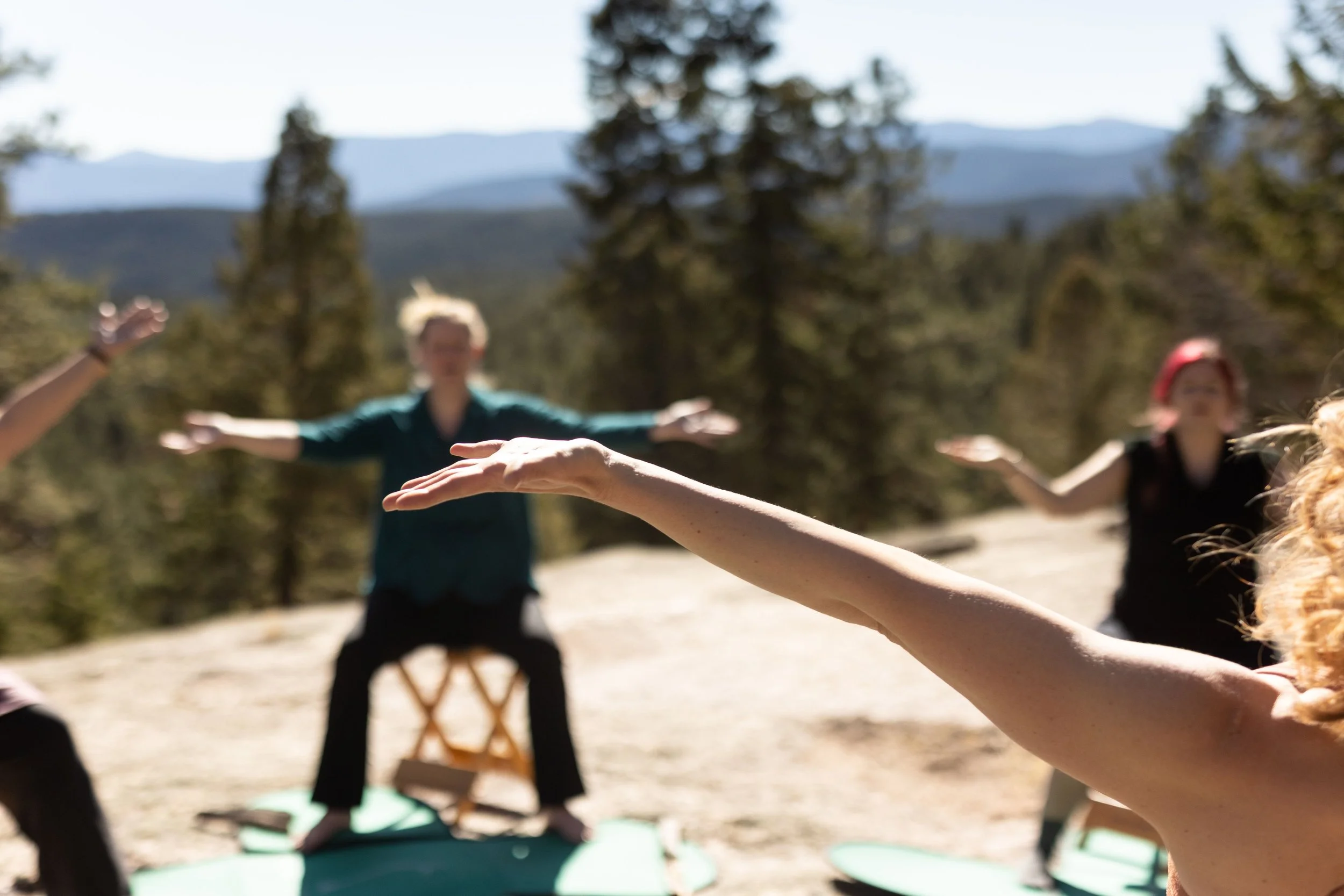
In Gyrokinesis, movement is explored through the spine, breath, spirals, and relationships between different parts of the body. Instead of asking only whether one joint can perform a particular movement, you can begin asking how that movement is supported by everything around it.
For example, raising an arm involves more than the shoulder. The ribs and spine need to participate. The pelvis provides a foundation. The breath changes. Weight may shift through the feet.
When those relationships become more coordinated, movement can begin to feel less like a collection of separate exercises and more like something the whole body understands.
Why Breath Matters During Recovery
Breathing is another part of movement that can change after injury.
When people are protecting themselves, they may unconsciously hold their breath or restrict movement through the ribs. That can then influence how the spine, shoulders, and neck move.
In Maggie's work, breath is integrated directly into movement rather than treated as a separate relaxation exercise. The purpose is not to force a deeper breath. It is to become aware of how breathing and movement affect one another and to gradually allow more movement where the body has become restricted.
This is one of the foundations of breath-led movement.
Recovery Is More Than Getting Stronger
Strength is important, but strength does not automatically restore coordination.
A person can become stronger while continuing to move around an old injury. They can have excellent muscle strength and still avoid rotating through their spine or loading one side of the body naturally.
For someone who has been through surgery or a long rehabilitation process, the next stage may therefore be less about adding more exercises and more about understanding how the body has adapted.
Some useful questions might be:
Where am I still protecting myself?
Where have I stopped moving?
What parts of my body are compensating?
How does my breath change when I move?
Can I feel the relationship between one side of my body and the other?
These questions are part of movement education, rather than simply exercise instruction.
From Treating the Injury to Understanding the Pattern
When people come to me after trying multiple approaches, they are often not looking for another list of exercises. They want to understand why they are still stuck.
That is where the distinction becomes important.
The goal is not to ignore the original injury or pretend that medical treatment was unnecessary. It is to recognize that the body has a history. Surgery, immobilization, pain, fear, and years of compensation can all influence how someone moves long after the original event.
Working with the whole body gives us another way to explore those patterns.
If you have recovered from an injury or surgery but still feel that something is missing, post-surgical movement and whole-body coordination may be worth exploring as part of your continued movement education.
The starting point is not necessarily pushing harder. It is learning to notice what your body is doing and understanding how the different parts are working together.
If you would like to explore whether this approach is appropriate for your situation, you can book a free 15-minute consultation. It is a chance to talk through your history and understand whether this work is a good fit before beginning private sessions.